Choose hours around your first and last must-have moments.
The hours of wedding videography you need depend on your first and last must-have moments, plus travel and the time between them. Our film collections offer 6, 8, or 10 hours of coverage.
Build your coverage around moments, not a number.
For all-day wedding videography and photography, write down your ceremony time, what you want captured before it, and the last event you want covered. Include travel between locations, and confirm the start and finish with both teams.
Then choose the coverage window that fits those moments.

Getting ready can be part of the story when your coverage begins before the ceremony.
6 hours can fit a compact wedding timeline.
Our Essential collection includes 6 hours, one filmmaker, and a 4–5 minute cinematic film.
A 2–8 p.m. example might suit a 3 p.m. ceremony and early reception events. It excludes earlier preparations and later events—check your own schedule.
8 hours gives preparations and reception more room.
Our Signature collection includes 8 hours, two filmmakers, a 6–8 minute cinematic film, and separate full ceremony and speeches + toast films.
Choose the start and finish deliberately: 1–9 p.m. and 3–11 p.m. cover different memories.
Consider 10 hours for a longer or more spread-out day.
Our Heirloom collection includes 10 hours, two filmmakers, an 8–10 minute cinematic film, a documentary film, and separate ceremony and speeches + toast films.
Check the full span if you want both early preparations and a late exit.
6 hours: a focused window
A focused window around the moments you value most.
8 hours: more breathing room
More room for preparations and reception events, depending on your schedule.
10 hours: a longer day
A longer window for days with early starts, more travel, or later events.
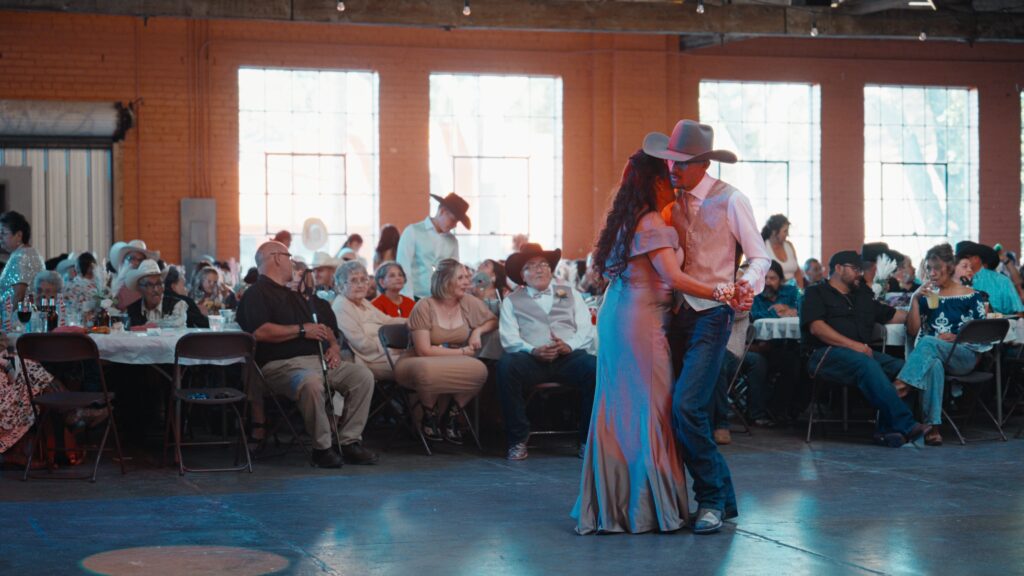
Check when the moments you want to keep will happen, including the family dances.
Plan all-day wedding videography around your actual timeline.
- Choose your first must-have moment. This might be getting dressed, exchanging letters, a first look, or arriving at the ceremony.
- Choose your last must-have moment. Confirm when speeches, dances, and any planned exit will actually happen.
- Add location changes. Travel, parking, and moving equipment take time within a wedding day.
- Coordinate the schedule. Share your plans with your coordinator, DJ, photographer, and filmmaker.
- Discuss changes in advance. Ask how extra coverage would work if your plans grow.
Count from your first must-have moment to your last.
Count the hours from your first must-have moment to your last, including travel between locations within that window. Talk through the schedule with your wedding team.
Choose the finished films as well as the coverage hours.
Coverage hours and deliverables answer different questions: when we film, and what you receive. Ask specifically about full ceremony, speeches, and documentary films.
Compare our collections, then share your date, venue, and draft timeline.
Keep coverage time and film length separate.
6 hours works when your priorities fit inside that window.
They can, if your must-have moments and travel fit between the start and finish of coverage. Check your actual schedule rather than relying on a sample timeline.
More filming hours don’t automatically mean a longer film.
Coverage hours describe filming time. Your collection’s deliverables describe the films you receive and their lengths. Compare both before deciding.